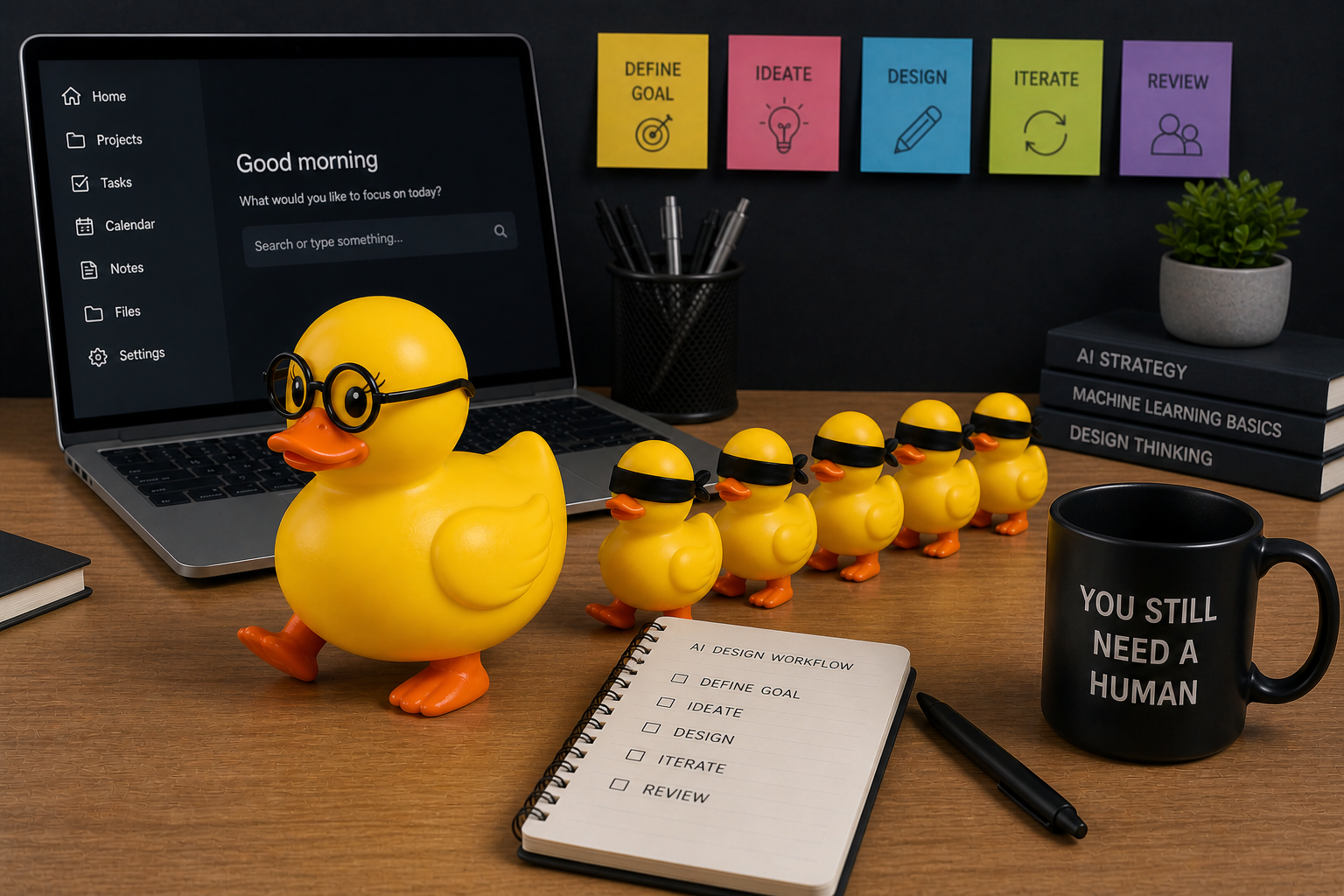

A brand is a strategic advantage. AI can make it a hot mess.
Generative AI has changed the game when it comes to design. What used to take days can now be completed in hours, minutes or even seconds. But quick does not mean good. AI tools make it easier to design reports, marketing materials and images, but all too often what is generated simply is not up to scratch or inconsistent.
The power of a brand is the result of consistent design across all of an organization’s materials. In the AI Age having a human designer with the expertise to leverage the tools that are available and ensure consistency across materials is key to realizing both the efficiencies that are possible from AI and the quality and consistency of design essential to building and nurtusing powerful brands.
The Blind Duck Problem
I named my company Blind Duck Design because as a child I needed glasses and my nickname was duck. It’s a long story. We’ve always had a vision for design - that done well design can be a powerful strategic advantage to differentiate companies in a competitive landscape.
Then came AI. Suddenly, everyone is a designer. Suddenly, the tools to produce powerpoint presentations and reports that look good, but are all over the place from a design perspective when put together. While the tools are deceptively simple at first glance, all too often, the results are mixed, experience frustrating, and from a brand perspective incoherent.
Right now, companies are to a great extent blind ducklings. They are playing with AI but don’t have the expertise or design vision to use it in ways that enhance efficiency and their brands. Teams experiment, outputs pile up, and design becomes noisier instead of more effective.
Their feet are paddling furiously beneath the surface, but progress is slow. The blind ducklings need an expert guide to help realize the efficiencies of AI design tools in ways that ensure consistency of branding across materials.
Access to tools is no longer the problem. Knowing what to use and the design expertise around how to use them is a challenge. That’s why the skillsets of designers, like writers and many other highly-skilled professionals, remain highly-relevant. Leveraging the tools available designers with expertise using AI tools can produce high-quality materials more quickly and efficiently for clients, while maintaining the design coherence and consistency required for modern brands.
A Reality Check: AI Needs Human Experts
The Myth of AI Autonomous Design
AI can generate images. But that does not mean they are effective at communicating. Having a human in the loop with design expertise is essential to the process of developing images and materials that do - consistent with your brand.
What Still Matters
The fundamentals have not changed. Strategy defines direction. Systems ensure consistency. Taste, the ability to make the right decisions, is now more visible than ever. AI amplifies all of it, but it does not replace any of it.
If anything, it removes the buffer. Good and bad decisions are exposed faster.
Take a webinar brief for a LinkedIn event focused on 2026 consumer trends: “What consumers want now”. The goal is to communicate credibility, insight, and expert positioning. There are multiple speakers, a strong research angle, and a professional audience.
If this brief is handed directly to AI tools without direction, the process typically produces multiple disconnected outputs. One visual may rely on generic “AI and data” imagery. Another may become abstract and visually interesting but unrelated to the message, or may be crowded with information but lack a clear hierarchy.
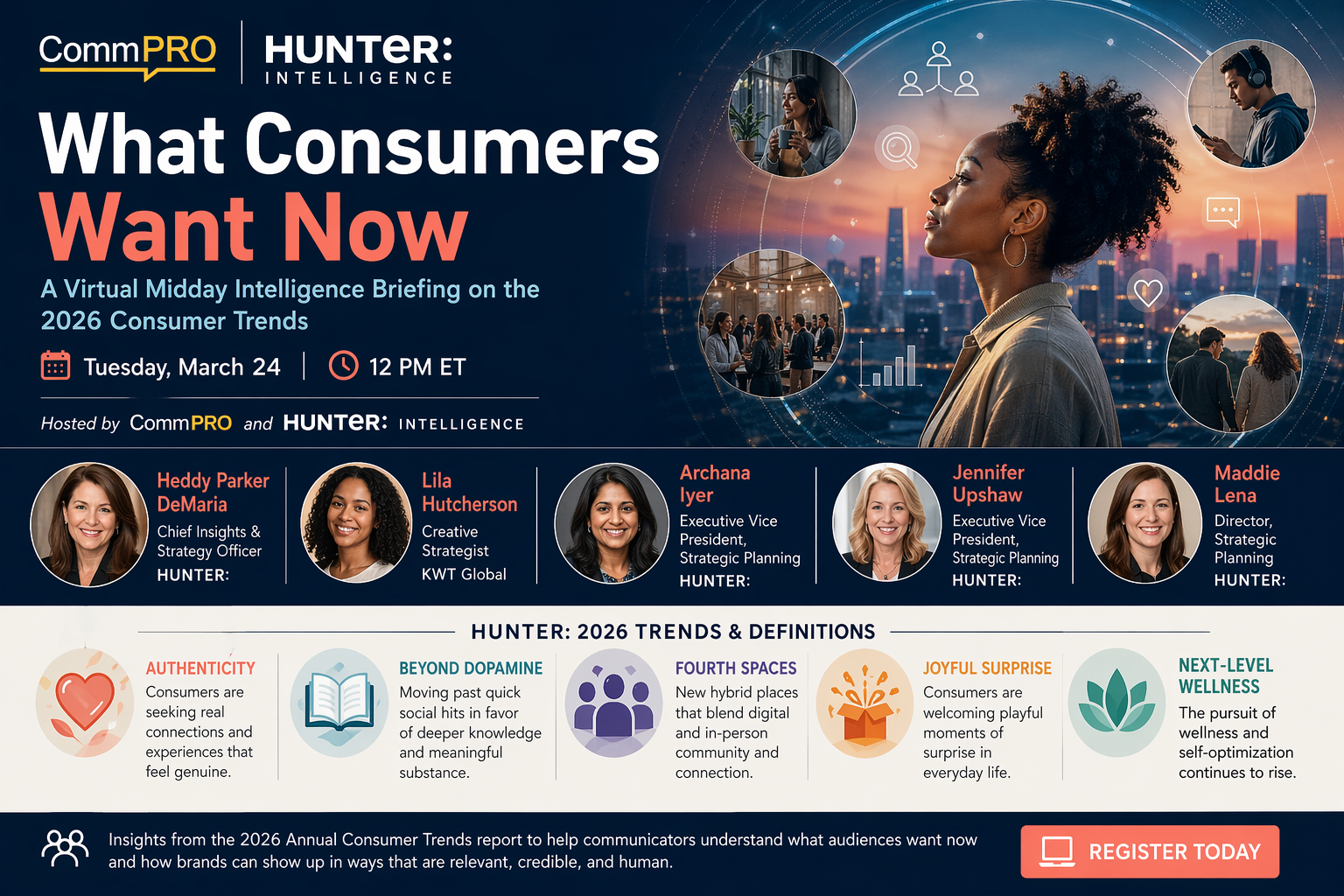
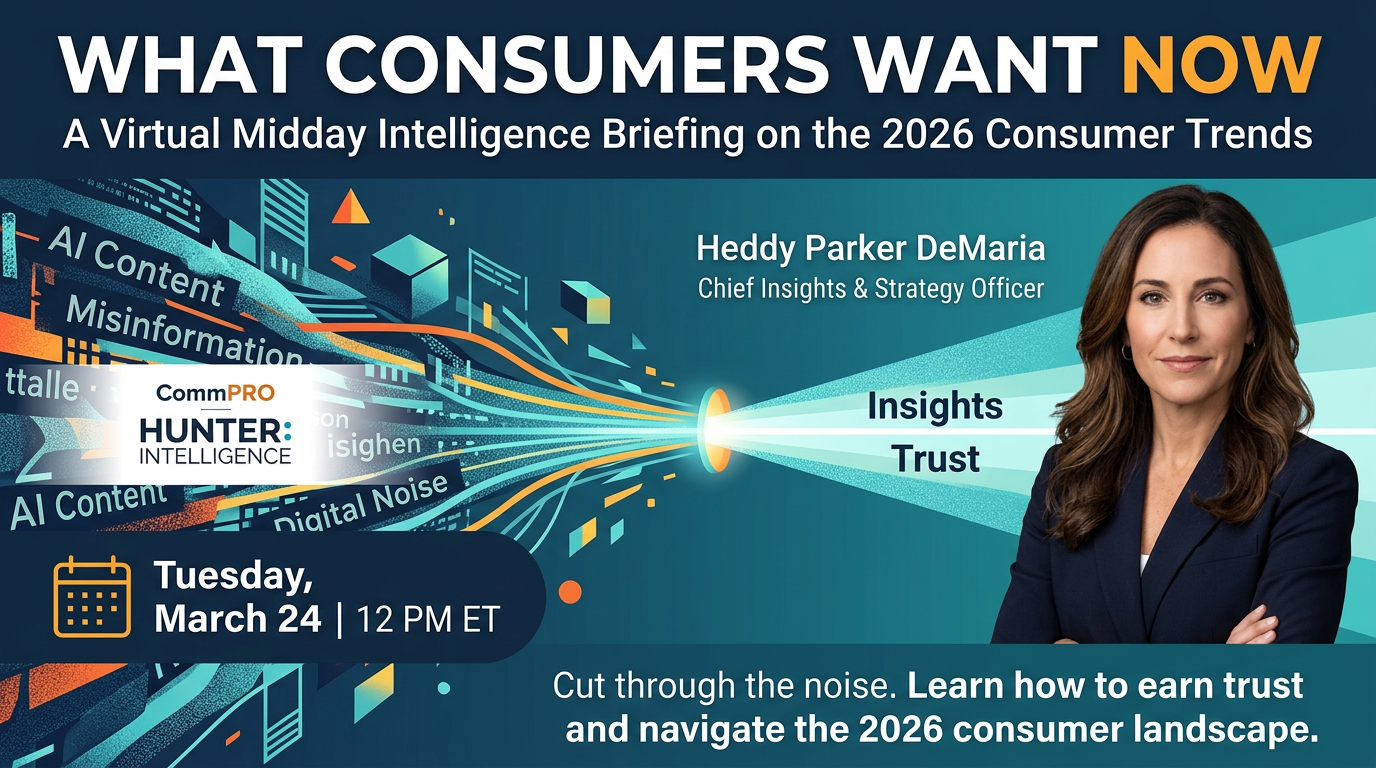
Even when the visuals look polished, the communication fails. The message becomes harder to scan. The tone becomes inconsistent. The emphasis on expertise and insight weakens.
Now compare that to a structured approach.
The same brief is distilled into key information. The design highlights what matters most. Visual hierarchy guides the viewer. The result is clean, readable, and aligned with the purpose of the event.
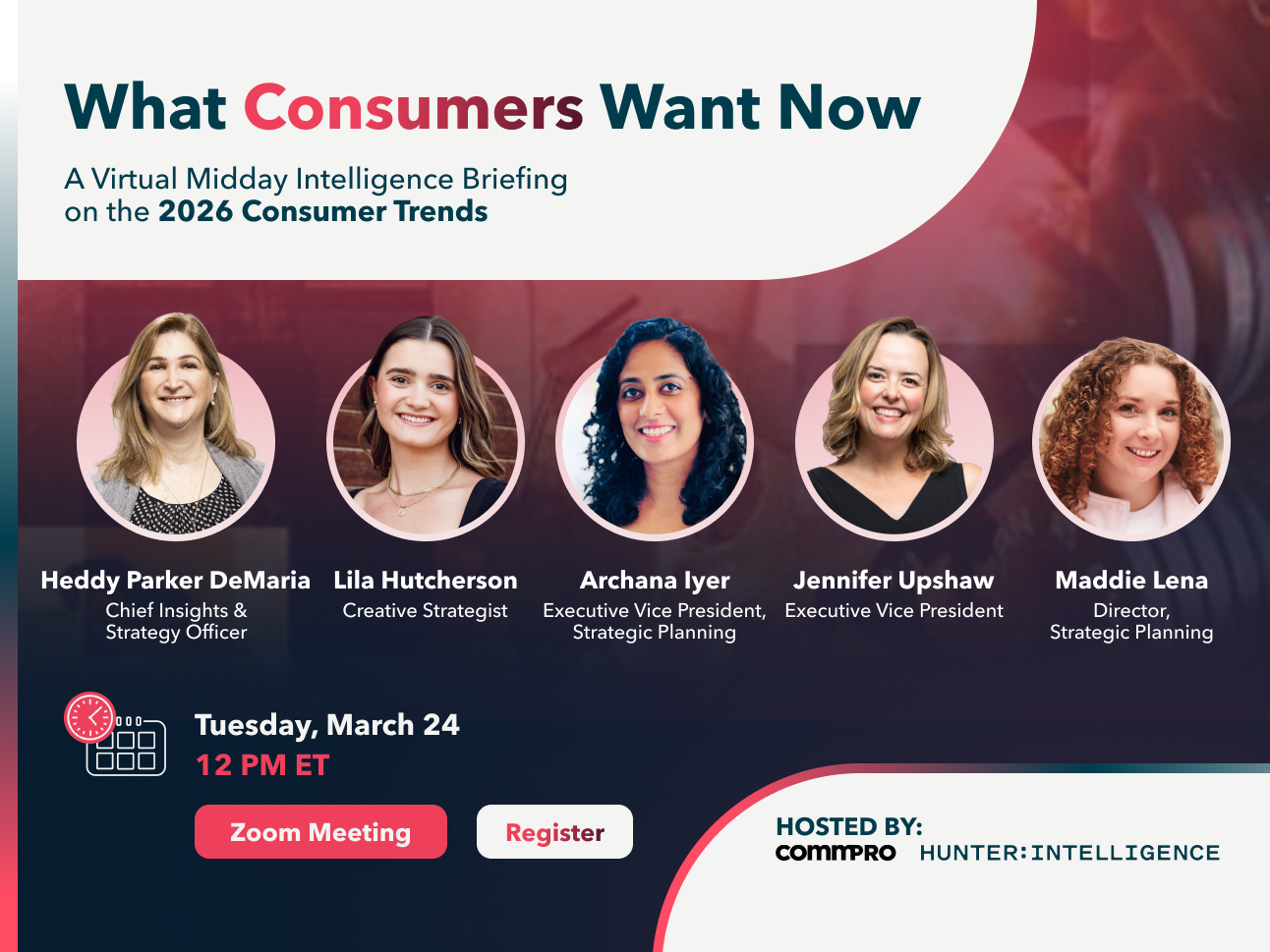
This is the difference between content and communication.
What AI Actually Changes
AI does not just make things faster. It changes how design operates inside a business.
Production becomes scalable instead of linear. Research becomes immediate instead of delayed. Distribution becomes adaptive instead of fixed.
For a communications or marketing team, this means a single brief does not have to result in one deliverable. A LinkedIn post can quickly expand into a landing page, a short video, multiple social formats, and supporting campaign assets.
The bottleneck is no longer execution. It is direction.
Where Companies Go Wrong
Many companies approach AI backwards. They start with tools instead of outcomes. They delegate experimentation without strategic oversight. They expect instant results without building systems.
The result is inconsistency at scale.
There is also a growing wave of tools promising easy solutions. Talking avatars that replace filming. AI-generated app designs. Instant branding systems. In reality, these tools often require multiple iterations to produce something usable. Faces distort. Logic breaks. Outputs need correction.
If used without oversight, the result is predictable. A spokesperson looks slightly different in every video. A product interface fails because core logic was never properly defined. Content becomes fast, but unreliable.
The real challenge is not using more tools. It is knowing which ones matter and which ones will last. More stable ecosystems like Google AI and Adobe’s AI are likely to remain. Many others will not.
Even professionals are still figuring this out. Building systems around AI is new for everyone.
Where AI Actually Helps
Used properly, AI removes friction. It handles repetitive production, accelerates research, and allows teams to explore more directions in less time. It increases output, but more importantly, it increases optionality.
That is where better decisions come from.
For example, instead of spending a full day brainstorming, you can use ChatGPT or Claude to generate multiple directions, angles, and pros and cons within minutes. The results are not perfect, but they provide a strong base for decision-making.
This is not about replacing thinking. It is about speeding it up.
Where It Breaks Without Direction
Without a system, AI quickly produces generic work. Brand consistency breaks down. Messaging drifts. Volume increases, but impact drops.
This becomes clear in ongoing content systems.
In a collaboration with Fora Financial, we developed a structured approach across multiple digital touchpoints. Social posts, hiring ads, and educational content all followed a consistent visual language. Typography, color, layout, and hierarchy worked together so that each piece felt connected while still serving a different purpose.

Without that system, AI-generated outputs tend to drift. A hiring post may emphasize imagery, while another prioritizes typography. Data visuals may become cluttered or lose readability. Colors and layouts shift depending on the tool or prompt.
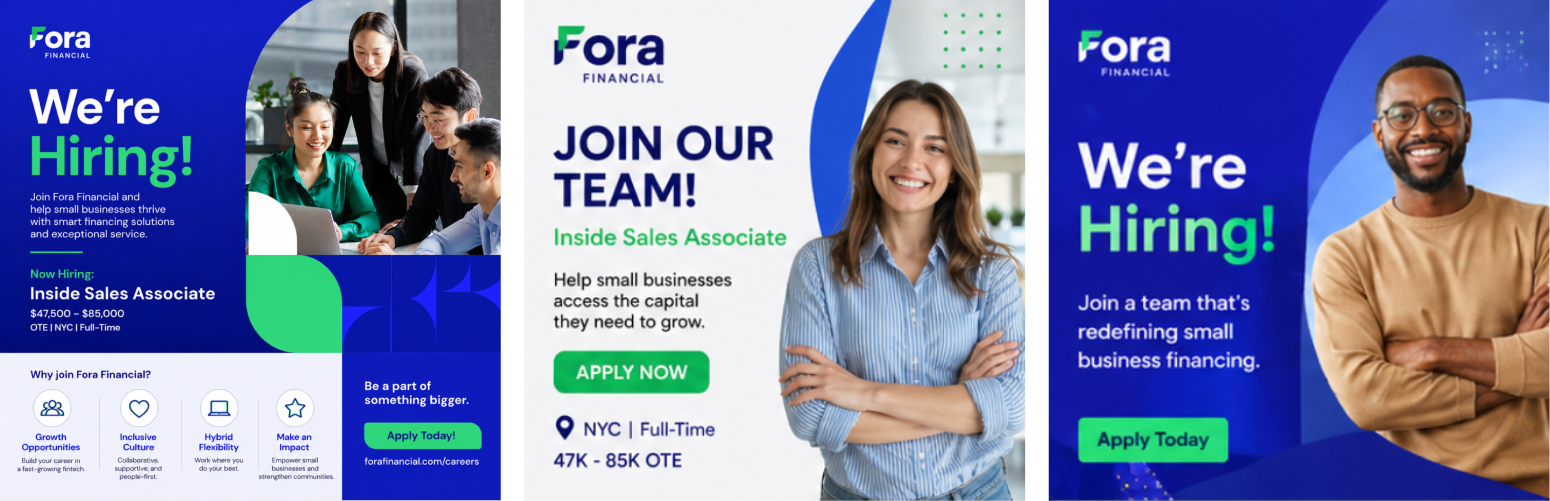
Individually, each piece looks complete. Together, they lose coherence. Everything is produced, but nothing works together.
All three ads follow a similar structure, with a model on the right and a large headline. However, the execution is inconsistent. The first is overly busy. The logo appears in different sizes across all three ads. There are three different CTA styles. Typography is inconsistent, mixing sentence case and all caps. Icons feel generic and disconnected from the brand. Background shapes vary in style, with mismatched angles and poor alignment.
The result is a set of ads that look finished on their own but fail to function as a cohesive system.
The Navigator Model
This is where most companies get stuck. Not because they lack tools, but because they lack navigation.
AI works best as a layer on top of experience. It needs clear processes, strong creative direction, and an understanding of how design supports business goals. Without that, even the best tools underperform.
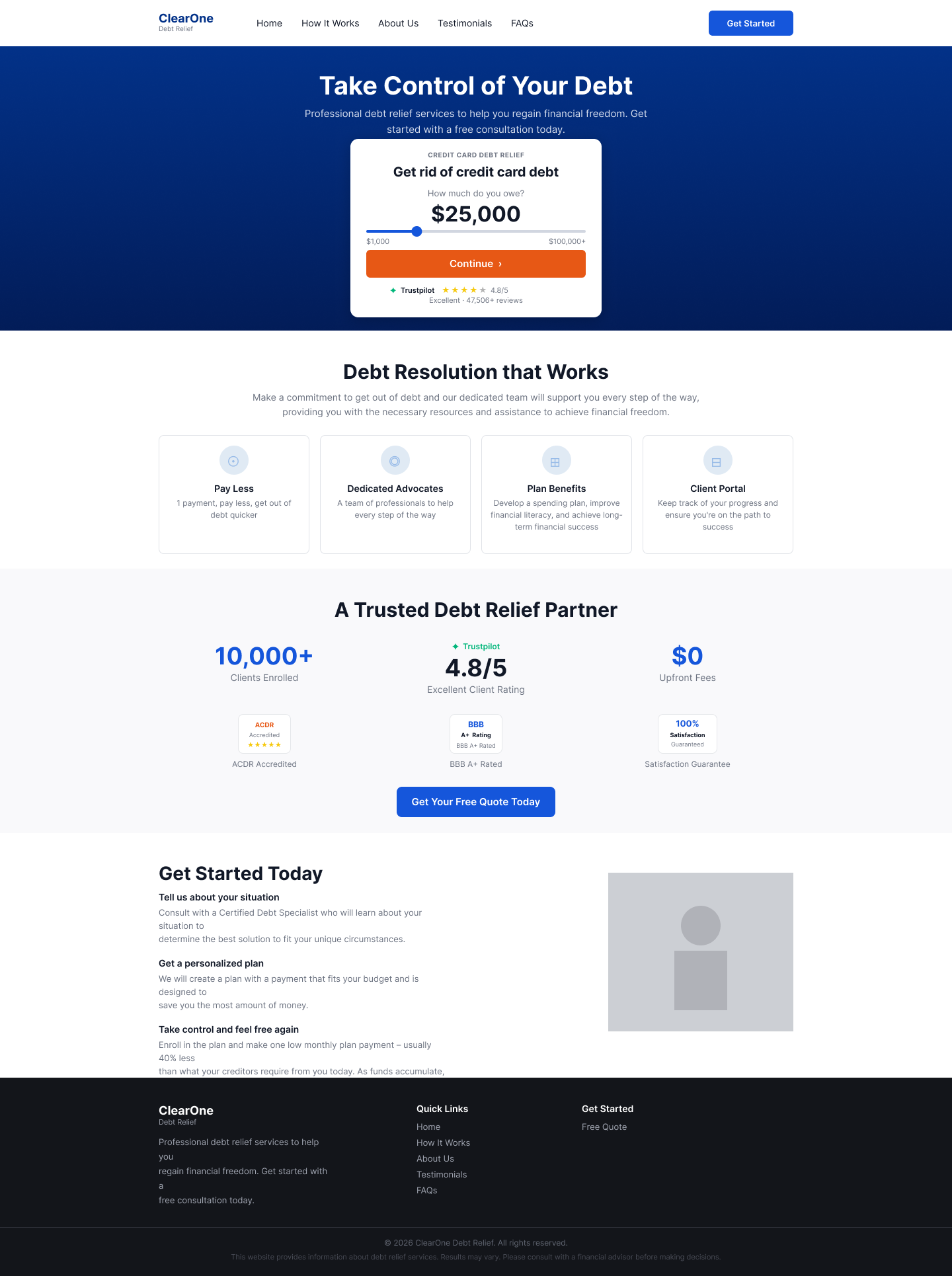
A good example is a recent client request for a landing page. The initial version was created by the client in Claude as a ready-to-use HTML page. It looked clean and aligned with the brand in terms of fonts and colors. However, it lacked character, and the client felt it was too generic.
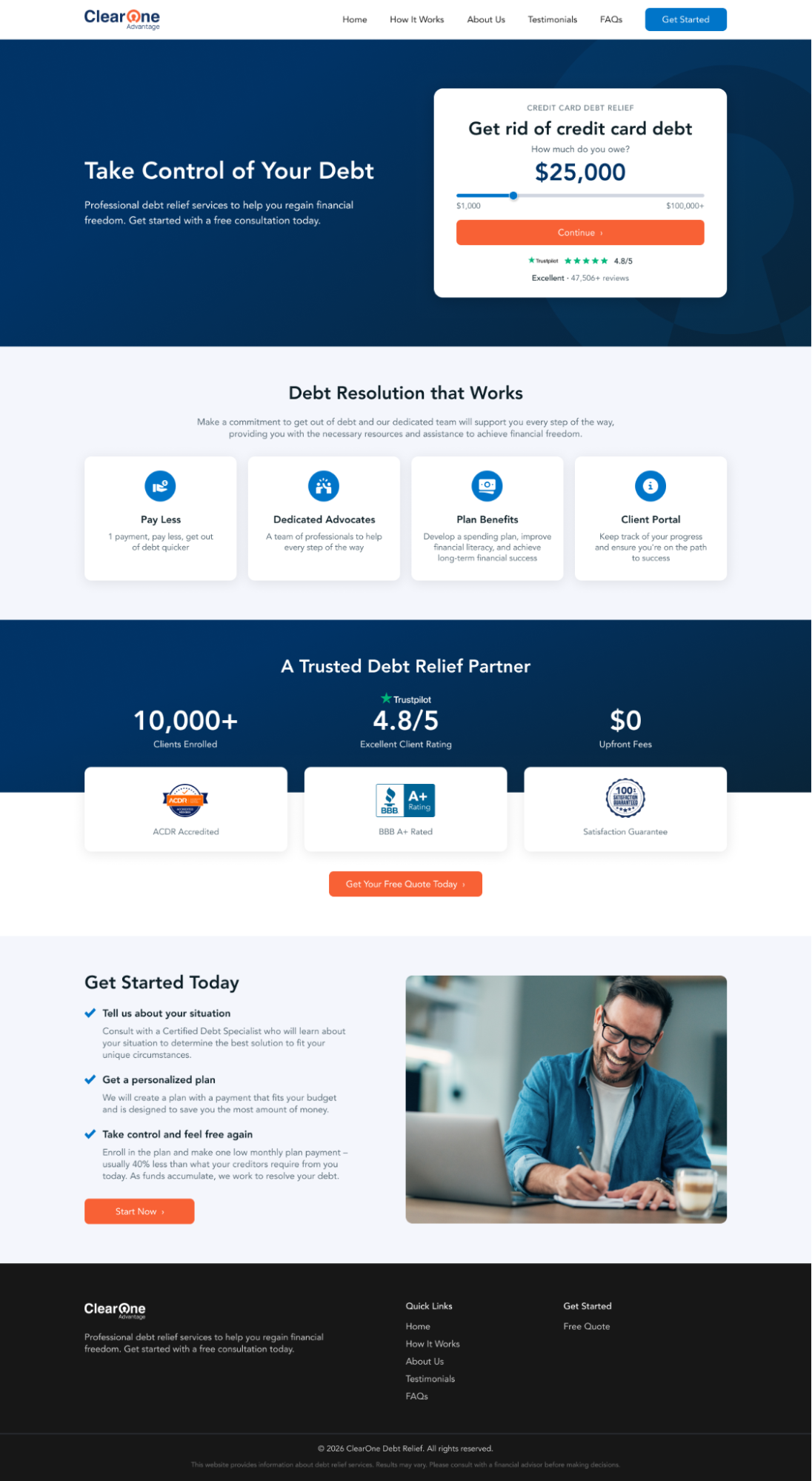
We refined the design by adjusting margins and padding, introducing custom icons, and adding layers, shadows, and other visual elements to improve structure. We also worked on copy hierarchy, imagery, and the overall layout to create a more intentional and engaging experience.
Conclusion
When it comes to AI there are a lot of blind ducklings with legs furiously paddling beneath the surface but who are going round in circles. We are still in the experimentation phase. As many communicators and marketers are discovering, the reality is the hype falls short when it comes to using these tools to create professional quality images, video and designed materials.
There is still need for design experts who are not only experts with AI tools, but have the experience and expertise to use them to efficiently generate design that builds brands and businesses.
The blind ducklings need an experienced blind duck to navigate them through what can be choppy waters. That’s what we do.
The good news for companies looking for great design is that with the use of AI tools, designers can be more efficient and create scalable implementations of materials across formats more easily. As we hear, again and again, with AI, the most powerful benefits are that it creates ways to do things that were not possible in the past.
Right now, it is not the technology that is the limitation.
Companies need experts to use the technology, who have a vision for design and where you want to go, and the ability to help companies get there. In the AI Age that’s the value we and other AI-forward designers bring to the pond.